Poster Presentation
Magnesium L-Threonate & College Athletes
Results from a 4-Week Randomized, Placebo-Controlled Pilot Study in UCLA Varsity Athletes
AMSSM 36th Annual Meeting · Seattle, WA · April 24–29, 2026
Results from a 4-Week Randomized, Placebo-Controlled Pilot Study in UCLA Varsity Athletes
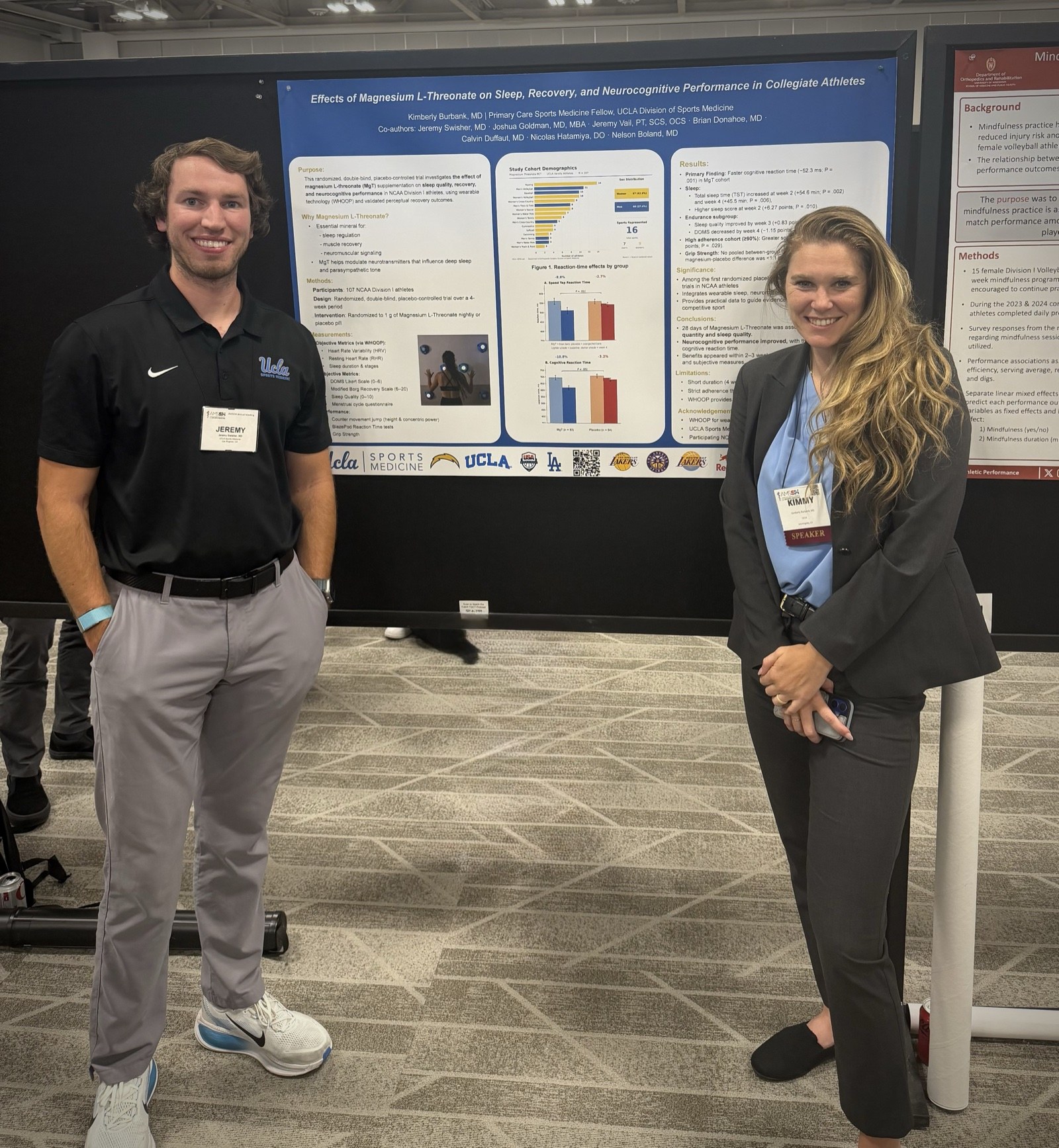
This study investigated whether magnesium L-threonate (MgT) — a form of magnesium uniquely capable of crossing the blood-brain barrier — can improve sleep quality, recovery, and physical performance in collegiate athletes. Healthy UCLA varsity athletes were randomly assigned to take either MgT or a placebo nightly for 4 weeks while wearing WHOOP straps to continuously monitor sleep, heart rate variability, and recovery metrics. Performance testing was completed at baseline and after the 4-week intervention.
Preliminary results from the 4-week pilot (n = 107; MgT = 53, placebo = 54) presented at AMSSM 2026.
28 days of nightly Magnesium L-Threonate (1 g) was associated with better sleep quantity and quality, and faster cognitive reaction time in NCAA Division I athletes. Benefits appeared within 2–3 weeks and were supported by both wearable (WHOOP) and subjective measures. No pooled between-group benefit was observed for grip strength.
PDF · 1.6 MB · Presented April 2026, Seattle, WA
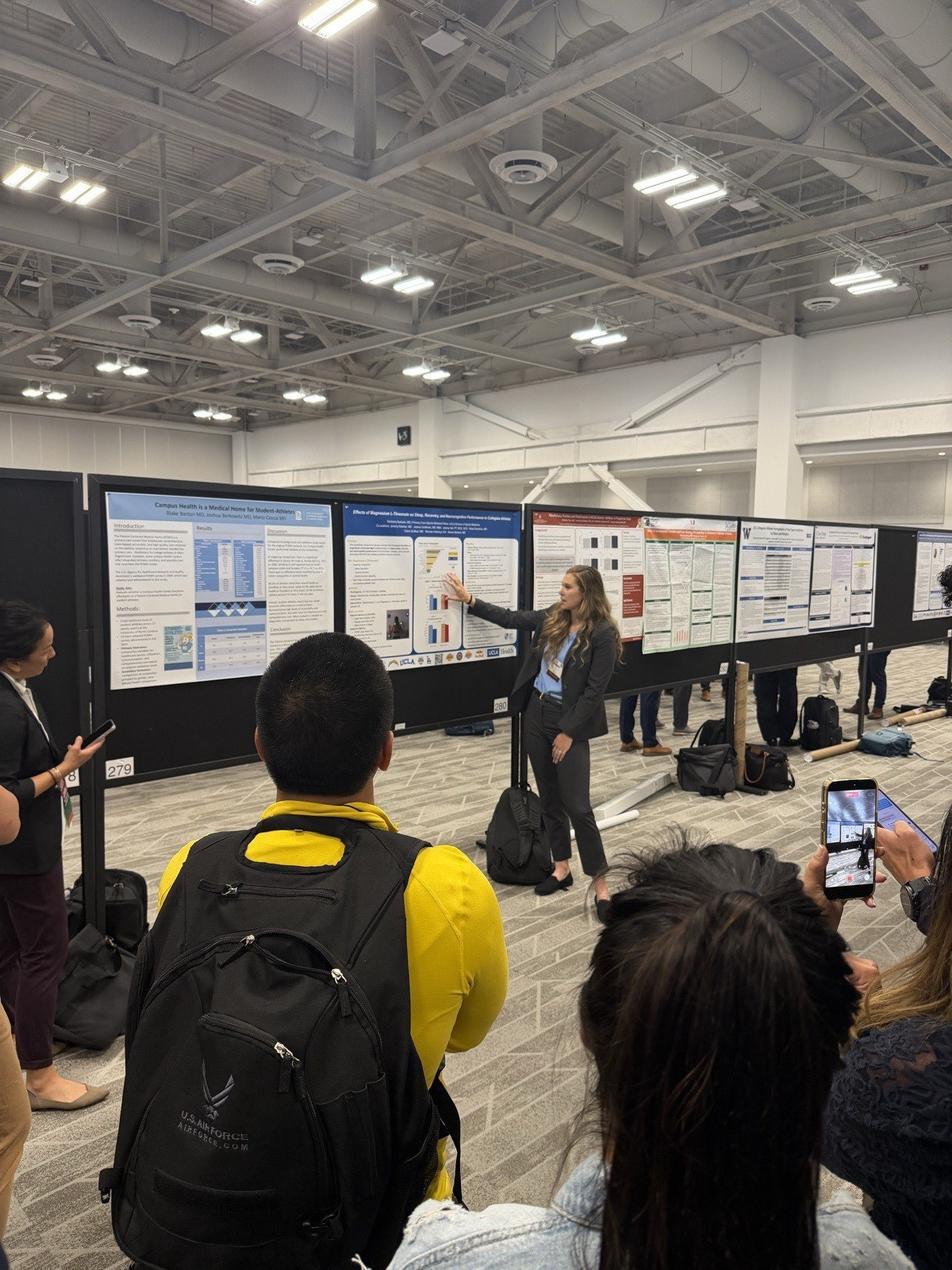
Scenes from the AMSSM 36th Annual Meeting poster session in Seattle, where Dr. Kimberly Burbank presented the HERO Lab’s Magnesium L-Threonate pilot trial.
Key peer-reviewed literature supporting the rationale and design of this pilot study.
Access the full study record, protocol details, and enrollment status.
NCT07015047UCLA varsity athletes can join an active study, and researchers or partners can collaborate with the HERO Lab.